

… when I am planning, teaching, reflecting.
I have read a lot of cognitive science books over the last 15 years or so, and have summarised many of them (it’s up to 56). You can find them here.
I have gained a huge number of insights during that time. To say those insights have changed the way I teach would be an understatement. I am confident my students learn more as a result, both more effectively and more efficiently.
Three books stand out. It’s not about being the ‘best’ (which is a subjective measure), or being the most widely read, or being by the most famous author. It’s that the messages in these books have stayed with me; how I think about my teaching is permeated by those messages.
Book 1: Learning Begins by Andrew Watson
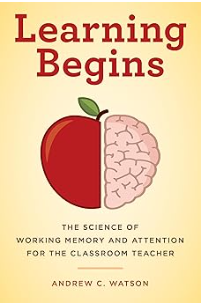
A fabulous discussion of working memory, and what cognitive overload looks like when it’s happening in front of you. So I have to:
- Anticipate… think about it from their point of view
- Adopt… a ‘working memory perspective’
- Adapt… to avoid ‘catastrophic failure’, often on the fly.
Book 2: Cognitive Apprenticeship in Action by John Tomsett
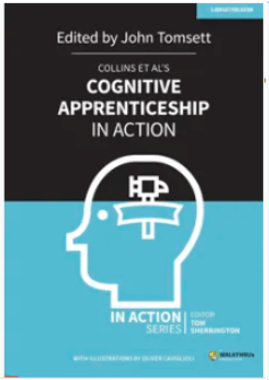
What distinguishes novices and experts? Their cognitive architecture. How can I help novices build their cognitive architecture? By:
- making my thinking visible (explicitly explaining what I’m thinking while doing things in real time, building it up slowly)
- zooming in and out (describing how what we’re doing fits into the Big Picture)
Book 3: Embedded Formative Assessment by Dylan Wiliam
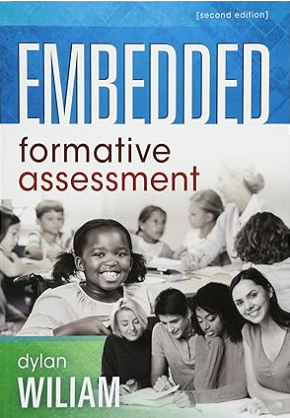
Dylan (together with the wonderful Paul Black) coined the term ‘formative assessment’. It is essential that I remember:
- What it is… it’s what I do to elicit data (i.e. checking for understanding) so as to inform my next steps in instruction, and change it up if I need to
- What it is not… a worksheet, a test, anything before the ‘big’ assessment
All three books have, of course, a summary!
This reflection was part of a researchED presentation that I gave in St Louis. You can download the resources here.

