

… or ‘on the benefits of being not very good’.
I’m a competitive ballroom dancer. I started 8 years ago having moved to the US in 2016 and I absolutely love it.
Here’s a snippet of my Quickstep from a few years ago:
Ballroom dancing and the brain
Little did I know, as I learned on an episode of The Huberman Podcast recently, that in terms of brain health and neuroplasticity, ballroom dancing is one of the very best things you can do.
Professor Andrew Huberman, a neuroscientist and professor of ophthalmology at Stanford School of Medicine. interviewed Dr. Tommy Wood, a professor of neuroscience at the University of Washington and an expert on brain health, neuroplasticity, and cognitive performance1.
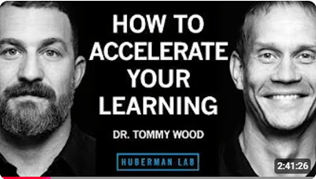
Here is the relevant section from about 27 minutes in:
Andrew: “If you had to throw out 3 or 4 things that are particularly potent plasticity inducers, what would those be?”
Tommy: “If you’re talking about things we have very good evidence for, which hit multiple networks at the same time, dancing is probably number one…”
Andrew: “ Learning a new dance? …on your own or with someone else?…”
Tommy: “The best evidence is for ballroom and line dancing, which generally requires… and there are meta-analyses of these interventions in older adults showing that ballroom and line dancing have the greatest effect on cognitive function… and so both of those require other people, as well as learning various sets of movements, so you have skill learning, you have social interaction, and you have a physical activity component, and there’s probably also the musical component where you have to listen for the timing of the music.”
So, check out your local dance studio for continued brain health! You won’t need to bring a partner; your teacher can be your partner!
Ballroom dancing and teaching
In addition to all the above benefits, I have really appreciated the insights I’ve gained from having to do something I’m not very good at. I’ve been able to apply what I now know about cognitive science (cogsci) to my experiences on the dance floor. Here are some examples:
- Novices are not little experts.
I’m a novice. My instructor and dance partner, Oleksiy Varyvoda is an expert. He’s been dancing since he was 9, so he has been growing his expertise for many decades.
I started by learning dances that are part of International Standard style: Waltz, Tango, Viennese Waltz, Slow Foxtrot, Quickstep. Then we moved to International Latin: Rumba, Chacha, Samba, Paso Doble, Jive. I was excited! A whole new way of moving, and new choreographies.
Then one day I commented that it was very different from Standard.
‘It’s the same*’, said Oleksiy, grinning broadly.
I smiled and nodded. My novice brain screamed ‘NO IT’S NOT THE SAME AT ALL. The names are different, the steps are different….’. But I smiled and resigned myself to knowing it was completely different even though he said it wasn’t. I wonder how often this has happened to the novices in my physics lessons. You are pulling the Earth with the same size force as the Earth is pulling you. Yeah, right.
Fast forward. This week we are working on Tango. Oleksiy reminded me about the way I moved in Rumba that I learned years ago and as he was doing it, it suddenly hit me. IT’S THE SAME movement of my spine as in Standard! It is, indeed, the same. Maybe I’m not such a novice after all. That student eventually sees that forces come in pairs, so yes, it is the same size force!
*Oleksiy has clarified that he meant the same principles, as in he sees the forest, I see the trees.
Cogsci research: Chi et al. found that novices and experts see physics problems differently2.
2. Expertise in one domain doesn’t produce shortcuts in a different one; you still need to practice.
There really isn’t any such thing as ‘muscle memory’. It’s all just memory, getting those neurons to wire together by doing that choreography over and over again. It has been salutary experience to realise that despite my expertise in physics teaching and, ironically, learning, it doesn’t reduce the need for practice. It’s shocking how quickly the Forgetting Curve kicks in, which makes spaced retrieval essential. Now all those retrieval practice questions in class, the spacing and timing of them… that makes perfect sense. Also, interestingly, it was a great exercise in re-discovering that cramming doesn’t work. When I started competing, I’d book extra lessons every day in the week before the event… it made no difference. Now we just go and do it.
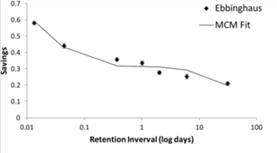
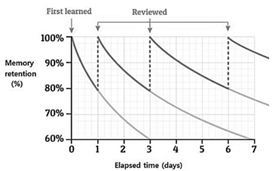
Cogsci research: Ebbinghaus experimented on himself and worked out how much you remember decays over time, and the associated graphic is the Forgetting Curve5.
3. Cognitive overload is real.
There’s a famous quote about Ginger Rogers6.
“Ginger Rogers did everything that Fred Astaire did. She just did it backward and in high heels.”
When we say ‘just did it’, that means holding my frame, keeping in contact with Oleksiy at all times, staying on his right (so you can see his shirt buttons), keeping my hips free to throw my leg back to make long steps, rotating my hips independently of my ribs as needed, keeping my feet on the floor at all times, having my weight in the right place in all parts of each step, simultaneously stretching up and allowing my hips to sink down…
… and remembering the choreography…
… and responding to the music
… backwards, and in heels.
It’s a lot… but that, I discovered, is not all.
Since we started, we’ve been working in a studio conveniently located near my house in Glenn Heights, Tucson. There’s an office near the door in one corner, and a table and sofa where I sit to put my shoes on in the opposite corner. When we finish the long line in Foxtrot we end up near the sofa. The fishtail in Quickstep is near the office.
Oleksiy has opened another studio in Oro Valley, and so I went for a lesson there instead.
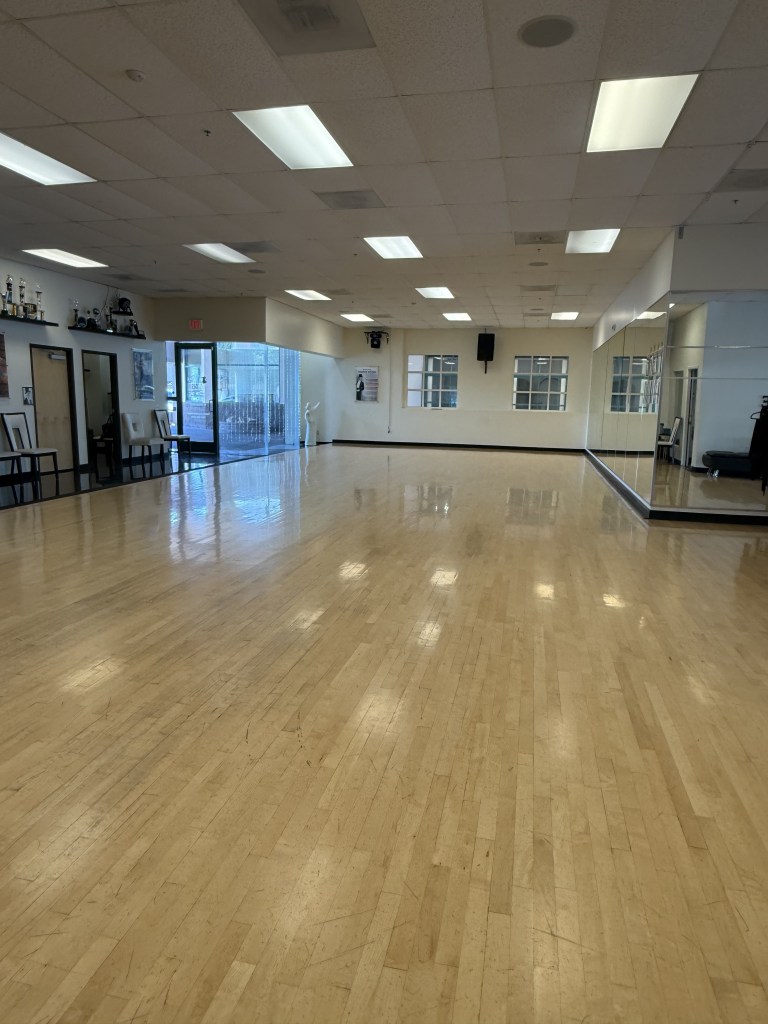
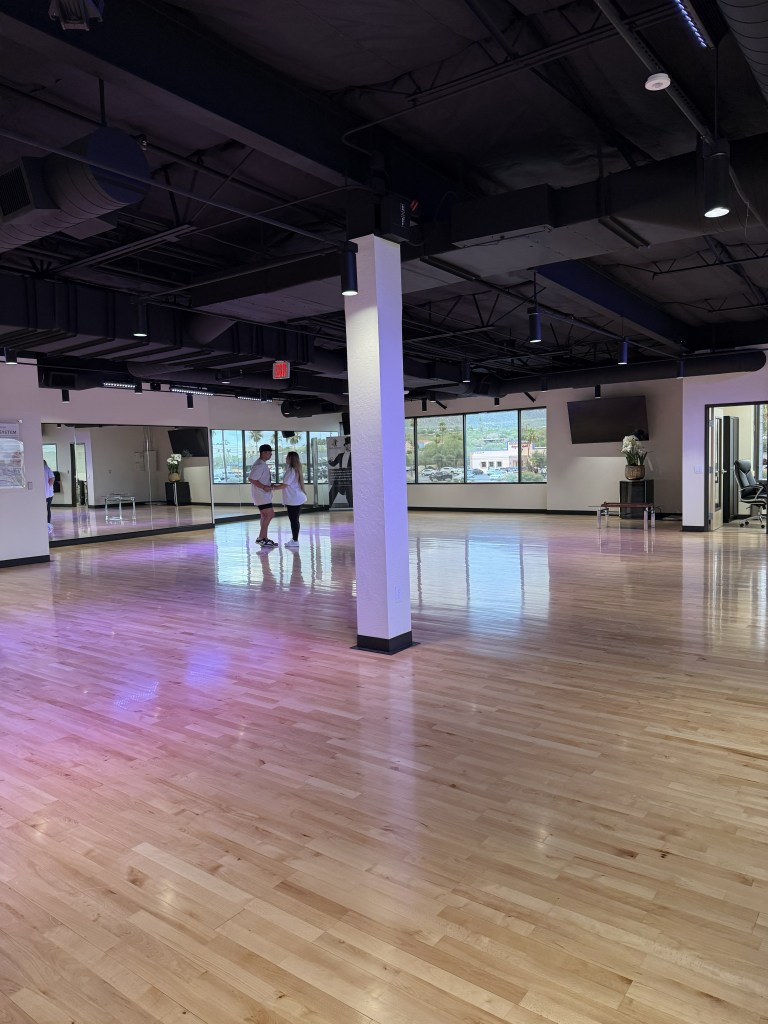
After a very short time into the first dance, I completely blanked. I could not compute all those things I had to do in addition to orienting myself… the whole environment was different. I was overloaded cognitively. This is a strange feeling and not one I think I’ve had in any other context as an adult. Why would I? I exist in domains in which my expertise is more than enough for any problem or situation. It’s a powerless, helpless feeling. The only thing I can say I’ve been successful at is not beating myself up about it.
This was not the first time it had happened. That was when I was in a competition for the first time and I though it was nerves. It wasn’t, it was cognitive overload. The vast amount of information my brain had to store included the physical environment and when that changed my working memory simply wasn’t big enough.
It’s a place to go once in a while as a teacher, if you can. Now that ‘look’ from students in my classroom also makes perfect sense because I know that feeling.
In the classroom I, the teacher, can do something about that. In the studio I have moved so much into my long-term memory now that in the last competition at the Bellagio in Las Vegas my working memory was fine, and I did not get cognitive overload once.
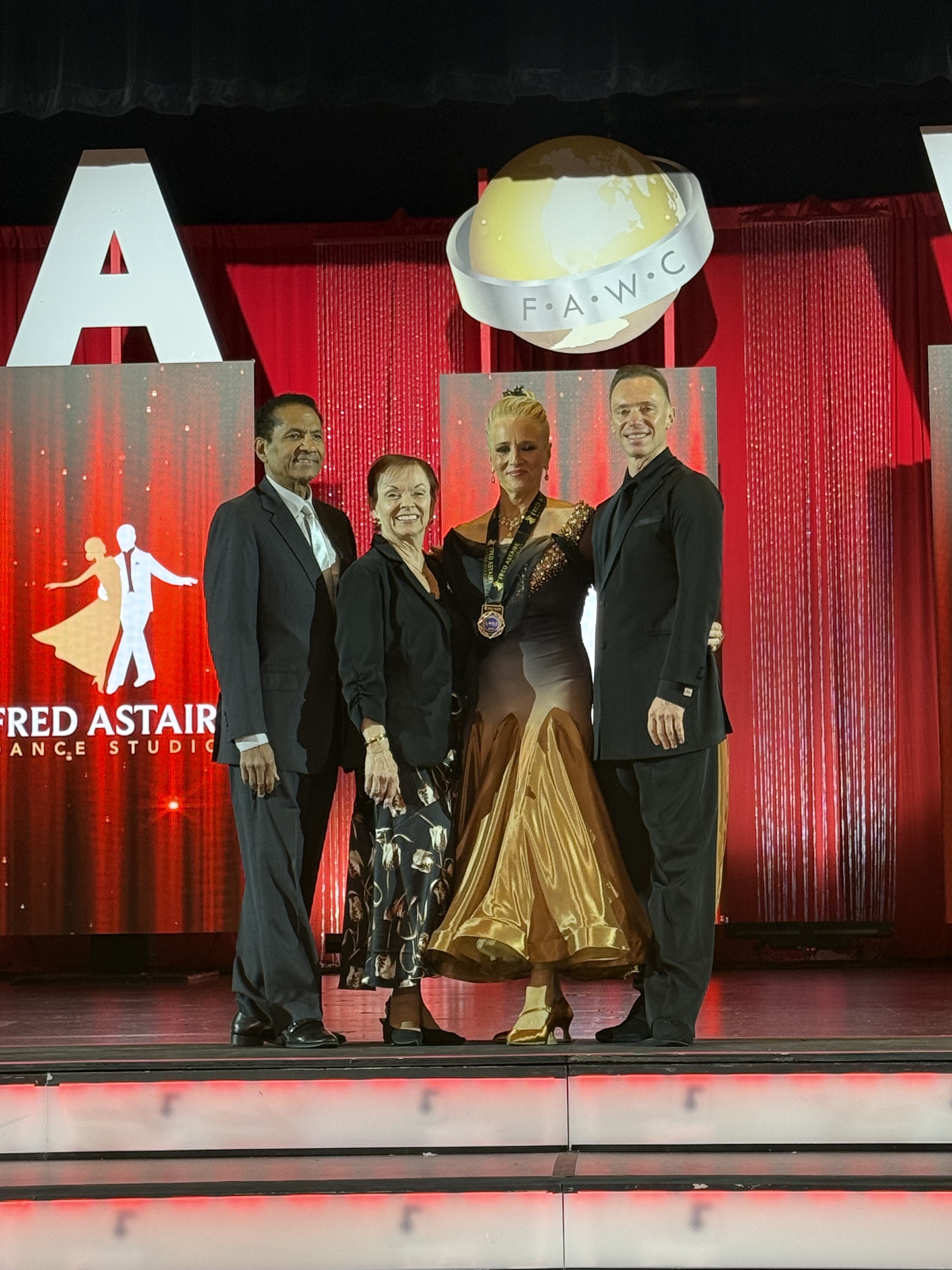
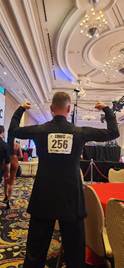
Also, it made me super happy as a physicist that our number was 256. Eight bits in a byte, number of values of each colour channel, number of bits required to represent all the keys on a keyboard. Yet more connections in that cognitive architecture.
Finally, I’d like to thank Oleksiy. As he has heard me say very many times, dancing has changed my life. What I didn’t fully appreciate is that it would give me such incredibly useful insights into my other love, teaching. Thank you.
Cogsci book: Andrew Watson describes the signs to look for in terms of overloading working memory in the classroom, with strategies for minimizing it happening to students.7
References:
- The Huberman Podcast, July 20th 2026: https://www.youtube.com/watch?v=bPd9NnOzx78
- Chi, M.T.H., Feltovich, P.J. and Glaser, R. (1981), Categorization and Representation of Physics Problems by Experts and Novices*. Cognitive Science, 5: 121-152. https://doi.org/10.1207/s15516709cog0502_2
- By Jaap M. J. Murre – https://www.ncbi.nlm.nih.gov/pmc/articles/PMC4492928/, CC BY 4.0, https://commons.wikimedia.org/w/index.php?curid=143131931
- Effective Learning Strategies And Artificial Intelligence (Ai) Support For Accelerated Math Acquisition – Scientific Figure on ResearchGate. Available from: https://www.researchgate.net/figure/Ebbinghaus-forgetting-curve-and-review-cycle-Chun-Heo-2018_fig2_347149009 [accessed 8 Aug 2026]
- Ebbinghaus, H. (1885). On memory: Investigations into experimental psychology. Psychologische Forschung, 2, 123-144.
- Richards, A. (1988) Democratic National Convention keynote speech. 18 July 1988, Atlanta, Georgia.
- Watson, Andrew. (2017). Learning Begins: The Science of Working Memory and Attention for the Classroom Teacher. Bloomsbury Press.

